One Pan Skillet Lasagna
Easy one-pan skillet lasagna with spicy fennel Italian sausage, no-boil noodles, ricotta and melted mozzarella. Stove to broiler in under an hour.
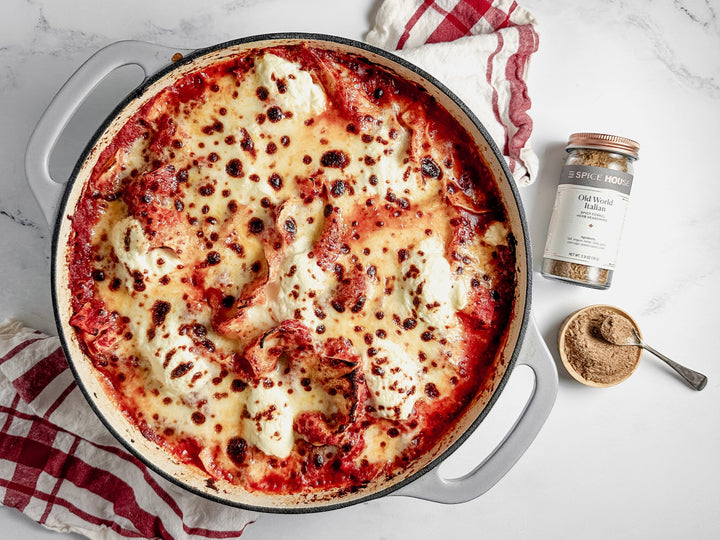
Our best-selling Old World Italian Seasoning is the perfect pair for this delicious skillet lasagna. Classic Italian sausage is spiced generously with cracked fennel seed, oregano, crushed red chiles, and garlic.
This recipe comes from our friend, Sheri Silver.
Yield: 6 servings
- Brown sausage and onions, then layer broken no-boil noodles and tomatoes in a single ovenproof skillet.
- Simmer covered so noodles soften, finish under the broiler with ricotta and mozzarella until bubbly.
- Use an oven-safe skillet or transfer to a baking dish; leftovers freeze or refrigerate for easy reheats.
Preparation Instructions:

thespicehouse.com
Frequently Asked Questions
Can I swap the Italian sausage for another meat?
Yes. Use mild or hot sausage, or swap for ground beef, turkey, or chicken. Cook until no pink remains and taste for seasoning; you may want to add more herbs if the sausage is mild.
What are no-boil lasagna noodles and can I use regular noodles?
No-boil noodles are dried to soften while simmering in sauce so you do not pre-cook them. If you use regular lasagna noodles, boil them first according to package directions and reduce the recipe liquid so it does not become too soupy.
How do I know if my skillet is ovenproof?
Cast iron, stainless steel, and skillets with metal handles are usually oven-safe. Check the manufacturer's label for the maximum oven temperature. If your skillet is not ovenproof, transfer the layered mixture to a baking dish before broiling.
Can I assemble this ahead of time?
Yes. You can assemble the skillet and refrigerate it, covered, for up to 24 hours. When ready, bring it to a simmer on the stovetop a few extra minutes if chilled, then finish under the broiler as directed.
Can I freeze the lasagna or leftovers?
Cooked leftovers freeze well for up to 3 months. Cool, portion, and wrap tightly. Reheat from frozen in a 350°F oven until heated through, or thaw overnight first. You can also assemble unbaked in an oven-safe container and freeze; thaw overnight before cooking and add extra baking time.
How do I avoid burning the cheese under the broiler?
Move the oven rack so the skillet is about 6 inches from the broiler element. Broil briefly, usually 1 to 3 minutes, and watch constantly. Rotate the skillet if needed to brown evenly.
Can I change the cheeses or increase the ricotta?
Yes. Fresh mozzarella, provolone, or grated Parmesan work well. If you prefer a firmer ricotta layer, stir in an egg and a pinch of salt before dolloping. Adjust amounts to suit your taste.
What if the noodles are sticking or still firm after simmering?
Gently separate stuck noodles with a spoon during the last simmer. If they remain firm, add 1/4 cup water at a time, cover and simmer a few more minutes until tender.
Can I swap the Italian sausage for another meat?
Yes. Use mild or hot sausage, or swap for ground beef, turkey, or chicken. Cook until no pink remains and taste for seasoning; you may want to add more herbs if the sausage is mild.
What are no-boil lasagna noodles and can I use regular noodles?
No-boil noodles are dried to soften while simmering in sauce so you do not pre-cook them. If you use regular lasagna noodles, boil them first according to package directions and reduce the recipe liquid so it does not become too soupy.
How do I know if my skillet is ovenproof?
Cast iron, stainless steel, and skillets with metal handles are usually oven-safe. Check the manufacturer's label for the maximum oven temperature. If your skillet is not ovenproof, transfer the layered mixture to a baking dish before broiling.
Can I assemble this ahead of time?
Yes. You can assemble the skillet and refrigerate it, covered, for up to 24 hours. When ready, bring it to a simmer on the stovetop a few extra minutes if chilled, then finish under the broiler as directed.
Can I freeze the lasagna or leftovers?
Cooked leftovers freeze well for up to 3 months. Cool, portion, and wrap tightly. Reheat from frozen in a 350°F oven until heated through, or thaw overnight first. You can also assemble unbaked in an oven-safe container and freeze; thaw overnight before cooking and add extra baking time.
How do I avoid burning the cheese under the broiler?
Move the oven rack so the skillet is about 6 inches from the broiler element. Broil briefly, usually 1 to 3 minutes, and watch constantly. Rotate the skillet if needed to brown evenly.
Can I change the cheeses or increase the ricotta?
Yes. Fresh mozzarella, provolone, or grated Parmesan work well. If you prefer a firmer ricotta layer, stir in an egg and a pinch of salt before dolloping. Adjust amounts to suit your taste.
What if the noodles are sticking or still firm after simmering?
Gently separate stuck noodles with a spoon during the last simmer. If they remain firm, add 1/4 cup water at a time, cover and simmer a few more minutes until tender.
This is so good, a fantastic easy recipe.