04.11.2022
Spring Cleaning Tips from NEAT Method
Simple spring cleaning and organizing tips from NEAT Method: start small, create zones, use organizers and labels, and keep spaces tidy with quick touch-ups.
- Begin with one small, high-use space so you can finish a project and build momentum.
- Sort seasonal items, make clear zones by category, and keep frequently used items in easy-to-reach spots.
- Use simple organizers, labels, and short daily touch-ups to keep systems working long term.

We are delighted to introduce our friends from NEAT Method, a luxury home organizing company. They recently shared some of their expert tips and best-kept secrets for tackling cleaning and organizing projects around the house.
NEAT Method was founded in 2010 to bring a fresh new face to the organizing industry. Their focus is on creating effective and sustainable systems that transform spaces from chaotic to composed. Their uniquely personalized lifestyle service is offered widely across the US and Canada. In 2020, they launched our first retail collection designed to create luxurious, smartly appointed living spaces. As NEAT continues to grow, the core value of the company will remain—helping others live the NEAT life!
1. Start Small
Begin by choosing just one highly utilized space in your home to organize and carve out a block of time to tackle it. Starting small will allow you to actually finish the first project and give you the confidence needed to move on to the rest of your home. Some great places to start are your spice drawer, “junk” drawer, linen closet or coat closet.
2. Overlooked Areas
Under the kitchen sink is an area that is accessed on a regular basis, but rarely cleaned out. Chances are high that you are likely using just a few products near the front and have no clue what is hiding beyond them. Take everything out, combine duplicates when possible and part with anything you no longer use or that would be better stored in a different area of your home. Be sure to give the area a good wipe down before putting everything you decide to keep back in place.
3. Edit Last Season
One of the most important ways to prep for spring is to go through all your winter items before putting them away and determine if there is anything you need to donate, recycle or put in the trash. The same applies to spring/summer items you may be pulling out of storage and placing back into your home.
4. Create Zones
When organizing a space that serves multiple purposes, it’s important to separate items by category and create zones for each group. Some examples of kitchen categories include: spices, utensils, serveware, cookware, cutlery and appliances. Remember to place items you access most frequently in your “prime real estate” zones, which are those that are easiest to reach.
5. Organizing Products
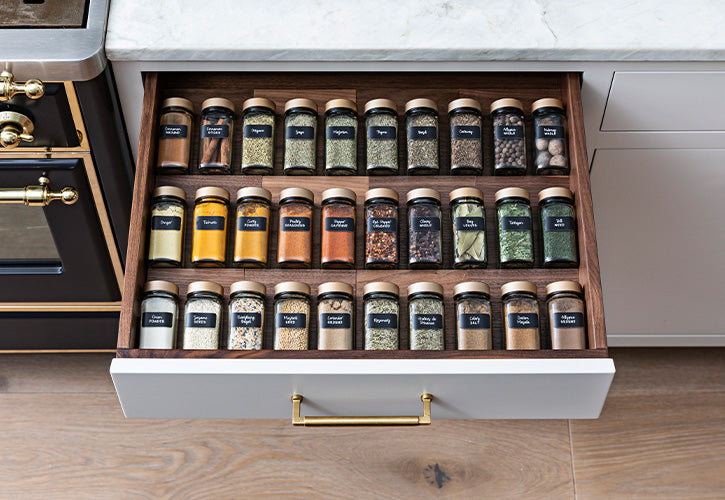
When it comes time to put everything back, decide what “boundaries” you need to keep everything in place. Spring loaded drawer dividers and multi-purpose drawer inserts are the perfect way to give your drawers a custom-like organizing solution. This spice bundle will not only make your space look beautiful, but will keep our spices fresh and save you time when cooking. Turntables make it much easier to reach items that may end up "lost" in the back of a cabinet. Glass jars are great for decanting items like flour and sugar, so you know when you are running low and need to replace.
6. Labels
Don’t forget to add label holders and labels, so your entire household knows exactly where everything is located, which will make things a breeze to find as well as put back away!
7. Touch-Ups
Once your space is organized, you will still need to do some sprucing up here and there in order to keep things in order. If you spend a few minutes a day touching up your newly organized space it should be a breeze to maintain. If you find that your system is easily falling apart, you might want to reconsider your categories and try keeping things a bit more general.
Photography by Martin Vecchio.
Frequently Asked Questions
Where should I start my spring cleaning?
Pick one small, often-used area and schedule a block of time to finish it. Good starters are a spice drawer, junk drawer, linen closet, or coat closet. Completing one space builds confidence to tackle more.
How do I clean and organize under the kitchen sink?
Empty the area, group like items, combine duplicates, and toss anything expired or unused. Wipe down the surface before returning what you keep. Consider relocating items that belong elsewhere.
How do I decide what to donate, recycle, or toss when switching seasons?
Try on or inspect each item. Donate things you did not wear or use last season, recycle damaged gear when possible, and throw out items beyond repair. If you hesitate, set a rule like 'not worn in 12 months' to guide decisions.
What does creating zones mean and how do I do it?
Divide a multi-use space into category zones, for example in a kitchen: spices, utensils, serveware, cookware, cutlery, and appliances. Put the items you use most in the easiest-to-reach spots.
Which organizing products provide the most impact?
Start with simple tools: drawer dividers, multi-purpose inserts, turntables, and clear jars for staples. These contain items, improve visibility, and make everyday tasks faster.
How should I label so everyone in the house knows where things go?
Use clear, consistent labels and holders. Label drawers and containers with short names. For kids or nonreaders, add a small picture. Place labels where they are easy to see when opening a drawer or cabinet.
How often should I do touch-ups to keep organized spaces tidy?
Spend a few minutes each day or a short weekly session to straighten items and return things to their zones. If the system keeps failing, simplify your categories so they are easier for everyone to follow.
I have limited time and budget. How can I still get results?
Work in 15 to 30 minute blocks and start with the smallest area. Use low-cost solutions like jars, bins, or repurposed boxes. Donate or discard items as you go to reduce clutter quickly.
Where should I start my spring cleaning?
Pick one small, often-used area and schedule a block of time to finish it. Good starters are a spice drawer, junk drawer, linen closet, or coat closet. Completing one space builds confidence to tackle more.
How do I clean and organize under the kitchen sink?
Empty the area, group like items, combine duplicates, and toss anything expired or unused. Wipe down the surface before returning what you keep. Consider relocating items that belong elsewhere.
How do I decide what to donate, recycle, or toss when switching seasons?
Try on or inspect each item. Donate things you did not wear or use last season, recycle damaged gear when possible, and throw out items beyond repair. If you hesitate, set a rule like 'not worn in 12 months' to guide decisions.
What does creating zones mean and how do I do it?
Divide a multi-use space into category zones, for example in a kitchen: spices, utensils, serveware, cookware, cutlery, and appliances. Put the items you use most in the easiest-to-reach spots.
Which organizing products provide the most impact?
Start with simple tools: drawer dividers, multi-purpose inserts, turntables, and clear jars for staples. These contain items, improve visibility, and make everyday tasks faster.
How should I label so everyone in the house knows where things go?
Use clear, consistent labels and holders. Label drawers and containers with short names. For kids or nonreaders, add a small picture. Place labels where they are easy to see when opening a drawer or cabinet.
How often should I do touch-ups to keep organized spaces tidy?
Spend a few minutes each day or a short weekly session to straighten items and return things to their zones. If the system keeps failing, simplify your categories so they are easier for everyone to follow.
I have limited time and budget. How can I still get results?
Work in 15 to 30 minute blocks and start with the smallest area. Use low-cost solutions like jars, bins, or repurposed boxes. Donate or discard items as you go to reduce clutter quickly.
Comments