Tomato Herbed Risotto & Seared Chicken
Creamy tomato risotto topped with butter-basted seared chicken and House Blend Herbs. Step-by-step tips for creamy rice and perfect crispy skin.
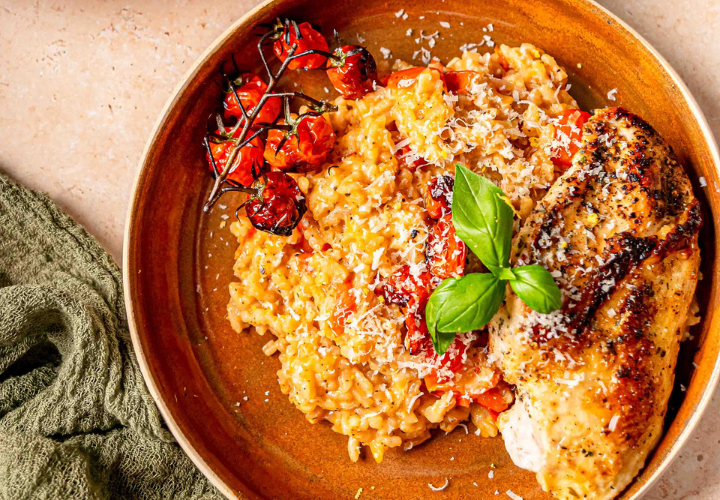
This savory, satisfying dish will be your go-to this Fall. Featuring our House Blend Herbs Salt-Free Seasoning.
This recipe comes from our friend Real Food With Sarah.
Yield: Serves 4
- Sear skin-on chicken in a cold cast iron pan and finish low and covered so it stays juicy with crisp skin.
- Make risotto by adding warm broth one ladle at a time, stir occasionally, and finish with cream and Parmesan for a silky texture.
- Cherry tomatoes and the salt-free House Blend Herbs add bright flavor; adjust salt and acidity with lemon or a splash of vinegar if needed.
Spices
Featured in this Recipe


Preparation Instructions:

thespicehouse.com
Frequently Asked Questions
Why start the chicken in a cold cast iron skillet?
Putting skin-on chicken into a cold cast iron pan helps the skin render fat and brown evenly as the pan heats. It reduces sticking and gives a crisp, golden skin as you bring the heat up to medium-high.
How do I know the chicken is fully cooked?
Use an instant-read thermometer. The internal temperature should reach 165°F (74°C). If you do not have a thermometer, cut into the thickest part to ensure juices run clear and the meat is no longer pink, then let it rest for a few minutes.
Can I use boneless skinless chicken or thighs instead?
Yes. Skinless breasts will cook faster and will not get a crispy skin, so reduce sear time and watch the internal temperature closely. Thighs are more forgiving and can handle slightly longer cooking times.
Is arborio rice required or can I substitute another grain?
Arborio, carnaroli, or vialone nano give the classic creamy risotto texture because they release starch as they cook. Long-grain rice will not get creamy. You can use pearl barley or farro for a different texture but expect longer cook time and a chewier bite.
Do I have to use white wine in the risotto?
No. Wine adds acidity and depth but is optional. If you skip it, add a splash of lemon juice or a teaspoon of vinegar toward the end, or simply replace the wine with an equal amount of warm broth.
How do I keep the risotto creamy and avoid it becoming gluey?
Use warm broth and add it a ladle at a time, letting the rice absorb most of each addition. Stir occasionally rather than constantly. Remove from heat when the rice is al dente and finish with cream and Parmesan off the heat for a silky finish.
Can I make the risotto or chicken ahead of time?
Risotto is best made and served immediately. For make-ahead, undercook the rice by a minute, cool, and reheat gently with extra warm broth or cream. Reheat chicken in a low oven or briefly under the broiler to revive the skin crispness.
What can I use instead of heavy cream or Parmesan, and how to adjust for the salt-free herb blend?
Substitute heavy cream with half and half plus a pat of butter, or stir in mascarpone for richness. Swap Parmesan for Pecorino or nutritional yeast for a dairy-free option. Since the House Blend is salt-free, taste and add salt gradually as the risotto finishes.
Why start the chicken in a cold cast iron skillet?
Putting skin-on chicken into a cold cast iron pan helps the skin render fat and brown evenly as the pan heats. It reduces sticking and gives a crisp, golden skin as you bring the heat up to medium-high.
How do I know the chicken is fully cooked?
Use an instant-read thermometer. The internal temperature should reach 165°F (74°C). If you do not have a thermometer, cut into the thickest part to ensure juices run clear and the meat is no longer pink, then let it rest for a few minutes.
Can I use boneless skinless chicken or thighs instead?
Yes. Skinless breasts will cook faster and will not get a crispy skin, so reduce sear time and watch the internal temperature closely. Thighs are more forgiving and can handle slightly longer cooking times.
Is arborio rice required or can I substitute another grain?
Arborio, carnaroli, or vialone nano give the classic creamy risotto texture because they release starch as they cook. Long-grain rice will not get creamy. You can use pearl barley or farro for a different texture but expect longer cook time and a chewier bite.
Do I have to use white wine in the risotto?
No. Wine adds acidity and depth but is optional. If you skip it, add a splash of lemon juice or a teaspoon of vinegar toward the end, or simply replace the wine with an equal amount of warm broth.
How do I keep the risotto creamy and avoid it becoming gluey?
Use warm broth and add it a ladle at a time, letting the rice absorb most of each addition. Stir occasionally rather than constantly. Remove from heat when the rice is al dente and finish with cream and Parmesan off the heat for a silky finish.
Can I make the risotto or chicken ahead of time?
Risotto is best made and served immediately. For make-ahead, undercook the rice by a minute, cool, and reheat gently with extra warm broth or cream. Reheat chicken in a low oven or briefly under the broiler to revive the skin crispness.
What can I use instead of heavy cream or Parmesan, and how to adjust for the salt-free herb blend?
Substitute heavy cream with half and half plus a pat of butter, or stir in mascarpone for richness. Swap Parmesan for Pecorino or nutritional yeast for a dairy-free option. Since the House Blend is salt-free, taste and add salt gradually as the risotto finishes.
Comments