Vanilla Bean Creme Brulee
Silky vanilla bean creme brulee: stovetop custard, water bath baking, and torch or broiler caramelized sugar. Easy tips for smooth results.
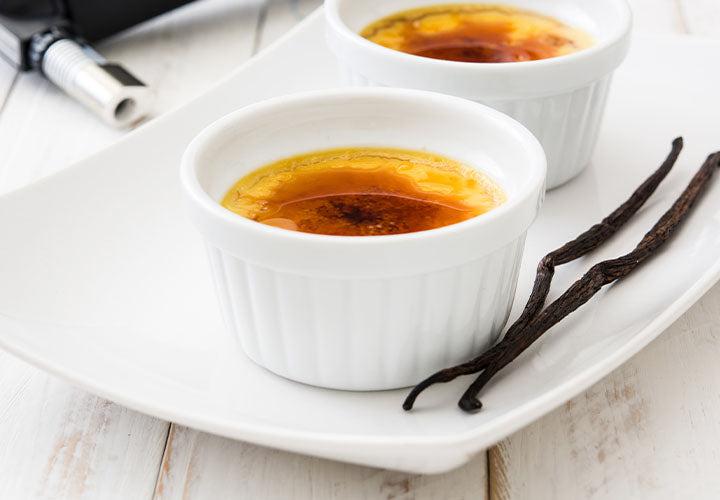
You can use any kind of vanilla bean for this, but Tahitian is particularly nice.
- Use gently heated cream with scraped vanilla seeds and a water bath at 325 F to produce a silky, even custard.
- Temper hot cream into egg yolks, strain the mixture, and bake until the center still jiggles slightly (about 30-35 minutes).
- Caramelize with a kitchen torch for best results or use the broiler with caution; follow chill times to keep a crisp sugar crust.
Spices
Featured in this Recipe
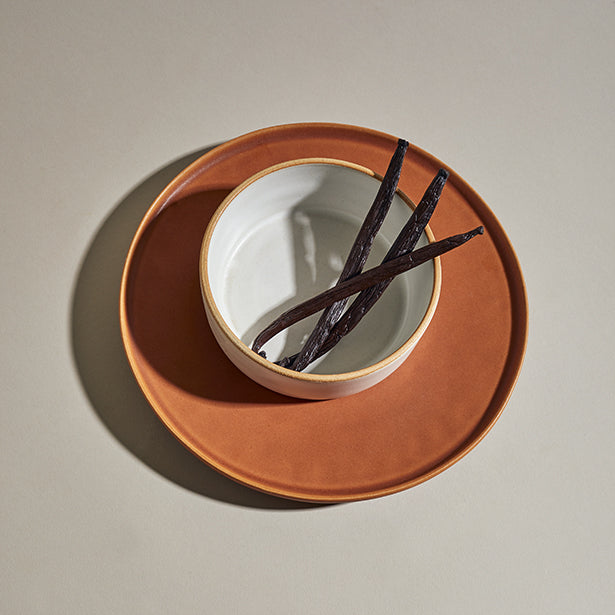

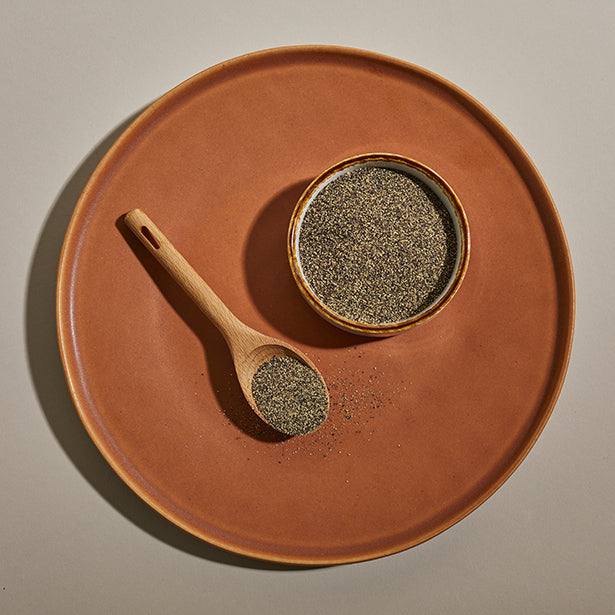

Preparation Instructions:

thespicehouse.com
More About This Recipe
Frequently Asked Questions
Which vanilla should I use for the best flavor?
Tahitian vanilla is recommended for its floral aroma, but Madagascar or any vanilla bean works. Split the pod, scrape the seeds into the cream and drop the pod in while heating for maximum flavor, then remove the pod when you strain the custard.
How do I prevent the custard from curdling or becoming grainy?
Heat the cream slowly until it barely simmers, do not boil. Temper the egg yolks by whisking in the hot cream a little at a time. Strain the mixture to remove solids and bake in a water bath at low heat. These steps keep the texture smooth.
How can I tell when the custards are done baking?
They are ready when the edges are set but the center still has a slight wobble when you gently shake the ramekin. At 325 F this usually takes about 30 to 35 minutes.
Can I use a broiler instead of a kitchen torch to caramelize the sugar?
Yes. Sprinkle about 1 teaspoon of sugar per custard and place ramekins in a dry baking dish under a high broiler for 3 to 5 minutes. Watch closely so the sugar browns but does not burn. Avoid leaving ramekins inside a pan under the broiler because uneven removal can cause burning.
How much sugar should I use for the top and what type is best?
Use 1 to 2 teaspoons of fine granulated or superfine sugar per custard. Spread it in an even layer before torching. Superfine sugar melts more evenly and gives a crisp, clear crust.
What are the chilling times before and after caramelizing?
After baking, cool ramekins 30 minutes at room temperature, then refrigerate at least 3 hours. You can refrigerate up to 2 days before caramelizing. After you torch or broil the sugar, chill the custards 2 to 4 hours to let the crust set; avoid chilling more than 4 hours or the crust will soften.
Why is there pepper in the recipe and is it required?
The 1/4 teaspoon of finely ground pepper is an optional touch that adds a subtle savory note and enhances flavor contrast. Leave it out if you prefer a classic sweet-only profile.
How should I store leftovers and can I re-crisp the sugar later?
Cover and refrigerate custards for up to 48 hours. The sugar crust will soften over time. To re-crisp it, briefly reheat the sugar surface with a kitchen torch just before serving.
Which vanilla should I use for the best flavor?
Tahitian vanilla is recommended for its floral aroma, but Madagascar or any vanilla bean works. Split the pod, scrape the seeds into the cream and drop the pod in while heating for maximum flavor, then remove the pod when you strain the custard.
How do I prevent the custard from curdling or becoming grainy?
Heat the cream slowly until it barely simmers, do not boil. Temper the egg yolks by whisking in the hot cream a little at a time. Strain the mixture to remove solids and bake in a water bath at low heat. These steps keep the texture smooth.
How can I tell when the custards are done baking?
They are ready when the edges are set but the center still has a slight wobble when you gently shake the ramekin. At 325 F this usually takes about 30 to 35 minutes.
Can I use a broiler instead of a kitchen torch to caramelize the sugar?
Yes. Sprinkle about 1 teaspoon of sugar per custard and place ramekins in a dry baking dish under a high broiler for 3 to 5 minutes. Watch closely so the sugar browns but does not burn. Avoid leaving ramekins inside a pan under the broiler because uneven removal can cause burning.
How much sugar should I use for the top and what type is best?
Use 1 to 2 teaspoons of fine granulated or superfine sugar per custard. Spread it in an even layer before torching. Superfine sugar melts more evenly and gives a crisp, clear crust.
What are the chilling times before and after caramelizing?
After baking, cool ramekins 30 minutes at room temperature, then refrigerate at least 3 hours. You can refrigerate up to 2 days before caramelizing. After you torch or broil the sugar, chill the custards 2 to 4 hours to let the crust set; avoid chilling more than 4 hours or the crust will soften.
Why is there pepper in the recipe and is it required?
The 1/4 teaspoon of finely ground pepper is an optional touch that adds a subtle savory note and enhances flavor contrast. Leave it out if you prefer a classic sweet-only profile.
How should I store leftovers and can I re-crisp the sugar later?
Cover and refrigerate custards for up to 48 hours. The sugar crust will soften over time. To re-crisp it, briefly reheat the sugar surface with a kitchen torch just before serving.
Made this for Valentines’ Day, and will repeat it for a New Years’ dinner with friends, who LOVE creme brulee, and probably haven’t had it with fresh Spice House vanilla bean.
Follow the recipe closely to avoid scorching the cream or scrambling the eggs. Take your time with the firing of the sugar (brulee), and it turns out amazing.