Savory Latkes
Crispy savory latkes with Ukrainian Village seasoning. Tips for grating, wringing, frying at 350°F, and smart make-ahead and serving ideas.
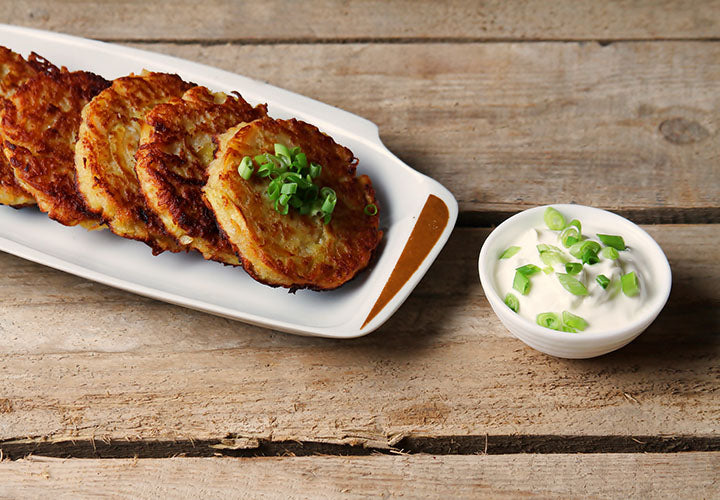
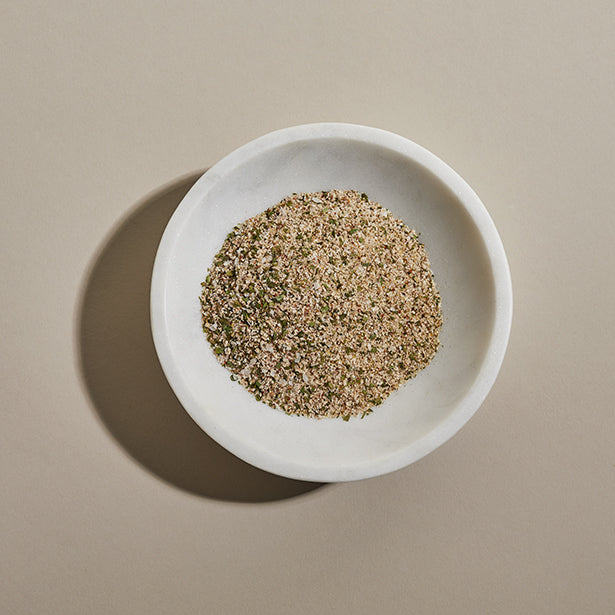
Tradition suggests that latkes should be served with sour cream and apple sauce. This recipe is seasoned with the Ukrainian Village blend, giving it an extra savory flavor of bell pepper and black pepper. Try serving these topped with sour cream, capers, caramelized onions, smoked salmon, caviar, blue cheese, or even hot sauce. These potato pancakes would make a great side for grilled fish any time of year.
- Use high-starch russet potatoes, coarsely grate, soak briefly, then wring very dry for crisp latkes.
- Bind with egg and a small amount of crumbs; fry in about 1/4 inch oil held near 350°F and keep warm in a 250°F oven.
- Serve with sour cream, applesauce, smoked salmon, or other savory toppings. You can refrigerate, freeze, or reheat for later.
Spices
Featured in this Recipe

Preparation Instructions:

thespicehouse.com
Frequently Asked Questions
What type of potato is best for latkes?
Russet potatoes are ideal because they are high in starch and low in moisture, which helps the latkes get crispy. Yukon Gold will work but yields a slightly denser, less crisp result.
Why do I soak and wring the grated potatoes?
Soaking and wringing removes excess starch and liquid. Less moisture means the latkes brown and crisp instead of steaming. Soak briefly in cold water, then squeeze or twist tightly in a towel to remove as much water as possible.
Do I have to use matzo meal or breadcrumbs?
No. The recipe uses 2 tablespoons of crushed matzo or plain breadcrumbs as a small binder. For gluten-free, swap in gluten-free crumbs, crushed rice or cornflakes, or 1 to 2 tablespoons of almond flour.
How do I keep the oil at the right temperature?
Aim for about 350°F. Use a deep-fry or instant-read thermometer to monitor it. Maintain medium-high heat, add more oil between batches if the level drops, and adjust the burner so the oil stays near 350°F for even browning.
How can I make latkes extra crispy?
Remove as much water as possible from the potatoes, make relatively thin patties, do not overcrowd the pan, and keep the oil hot. Drain on a wire rack over a baking sheet and finish in a 250°F oven to preserve crispness.
Can I make latkes ahead of time and how do I reheat them?
Yes. Refrigerate cooked latkes for up to 2 to 3 days. To freeze, flash-freeze on a sheet then store in a sealed bag for up to 3 months. Reheat in a 350°F oven or in a skillet until hot and crisp. Avoid microwaving if you want them crisp.
Can I make latkes without eggs or use schmaltz instead of oil?
Eggs help bind the mixture; a flax or chia egg can work but will change texture. Chicken schmaltz adds rich savory flavor and can replace oil, but use a neutral vegetable oil for a vegetarian option.
How many latkes does this recipe make and what are good serving ideas?
With 2 pounds of potatoes and 2-tablespoon scoops, expect about 12 to 16 small-to-medium latkes. Serve classic toppings like sour cream and applesauce or try smoked salmon, caramelized onions, capers, caviar, blue cheese, or hot sauce.
What type of potato is best for latkes?
Russet potatoes are ideal because they are high in starch and low in moisture, which helps the latkes get crispy. Yukon Gold will work but yields a slightly denser, less crisp result.
Why do I soak and wring the grated potatoes?
Soaking and wringing removes excess starch and liquid. Less moisture means the latkes brown and crisp instead of steaming. Soak briefly in cold water, then squeeze or twist tightly in a towel to remove as much water as possible.
Do I have to use matzo meal or breadcrumbs?
No. The recipe uses 2 tablespoons of crushed matzo or plain breadcrumbs as a small binder. For gluten-free, swap in gluten-free crumbs, crushed rice or cornflakes, or 1 to 2 tablespoons of almond flour.
How do I keep the oil at the right temperature?
Aim for about 350°F. Use a deep-fry or instant-read thermometer to monitor it. Maintain medium-high heat, add more oil between batches if the level drops, and adjust the burner so the oil stays near 350°F for even browning.
How can I make latkes extra crispy?
Remove as much water as possible from the potatoes, make relatively thin patties, do not overcrowd the pan, and keep the oil hot. Drain on a wire rack over a baking sheet and finish in a 250°F oven to preserve crispness.
Can I make latkes ahead of time and how do I reheat them?
Yes. Refrigerate cooked latkes for up to 2 to 3 days. To freeze, flash-freeze on a sheet then store in a sealed bag for up to 3 months. Reheat in a 350°F oven or in a skillet until hot and crisp. Avoid microwaving if you want them crisp.
Can I make latkes without eggs or use schmaltz instead of oil?
Eggs help bind the mixture; a flax or chia egg can work but will change texture. Chicken schmaltz adds rich savory flavor and can replace oil, but use a neutral vegetable oil for a vegetarian option.
How many latkes does this recipe make and what are good serving ideas?
With 2 pounds of potatoes and 2-tablespoon scoops, expect about 12 to 16 small-to-medium latkes. Serve classic toppings like sour cream and applesauce or try smoked salmon, caramelized onions, capers, caviar, blue cheese, or hot sauce.
Classic Latkes are made with matzo meal ( although some substitute flour) and schmaltz