Stir Fried Udon Noodles with Seafood—Kaisen Yaki Udon
Quick seafood udon with shiitake, kale, and a savory soy-sesame sauce. Ready in about 20 minutes. Chef Morimoto's Kaisen Yaki Udon.
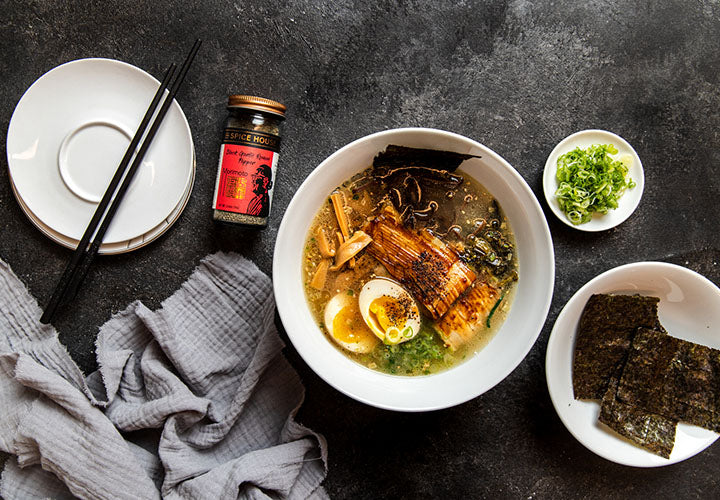
This recipe is delicious with almost any type of seafood. You can simply use shrimp or substitute in a light white fish like cod or pollack.
Recipe courtesy of Chef Masaharu Morimoto.
Yield: 4 servings
- Make the sauce ahead by mixing stock, soy, oyster sauce, sake, sugar, sesame oil, and seasoning.
- Blanch vegetables and briefly boil udon to prevent soggy noodles; drain and cool well.
- Stir-fry mushrooms, vegetables, and seafood on high heat, add sauce and noodles, then toss until coated and slightly thickened.
Spices
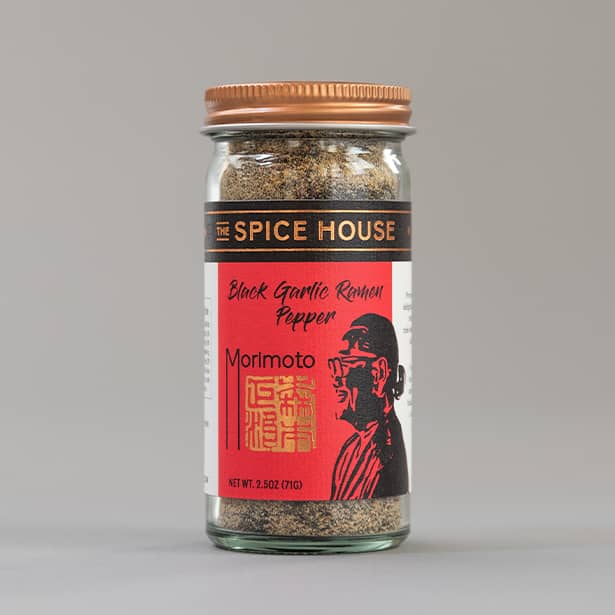
Featured in this Recipe

Preparation Instructions:

thespicehouse.com
Frequently Asked Questions
What is Black Garlic Ramen Pepper and can I substitute it?
Black Garlic Ramen Pepper is a savory seasoning blend with black garlic and pepper heat. If you do not have it, mix a pinch of black garlic powder or roasted garlic with black pepper and a little chili flakes. You can also use regular black pepper and a small clove of grated garlic.
Can I use frozen or precooked seafood?
Yes. Thaw frozen seafood fully and pat it very dry. If using precooked seafood, add it at the end just to warm through so it does not get rubbery. For raw seafood, stir-fry until almost cooked before adding sauce and noodles.
How do I avoid soggy udon noodles?
Do not overboil udon. Cook fresh about 2 minutes and frozen about 4 minutes, just until clumps separate. Rinse in cold water, drain well, and shake off excess liquid before stir-frying. Work on high heat so moisture evaporates quickly.
Can I make this recipe vegetarian or vegan?
Yes. Replace chicken stock with vegetable stock and swap oyster sauce for a mushroom-based vegetarian oyster sauce or hoisin mixed with soy. Replace seafood with firm tofu, extra mushrooms, or hearty vegetables like baby corn and bok choy.
How can I thicken the sauce if it is too thin?
Cook the sauce a bit longer on high to reduce it. For a quicker fix, whisk 1 teaspoon cornstarch with 1 tablespoon cold water and stir it into the sauce while cooking until it thickens. Add a little at a time to avoid over-thickening.
What is the best pan to use?
A wok or a wide, shallow skillet works best because they give room to toss the noodles and keep heat high. A Dutch oven works too but choose a wide surface so ingredients cook evenly.
How long can I store leftovers and how should I reheat them?
Store in an airtight container in the fridge for up to 2 days. Reheat in a skillet over medium-high heat with a splash of water or stock to loosen the sauce. Microwave works in a pinch but may make noodles softer.
Can I substitute udon with other noodles?
Yes, but texture will change. Thick wheat noodles like bucatini or fresh pasta work best. Rice noodles will be softer and absorb more sauce. Adjust cooking times and be careful not to overcook.
What is Black Garlic Ramen Pepper and can I substitute it?
Black Garlic Ramen Pepper is a savory seasoning blend with black garlic and pepper heat. If you do not have it, mix a pinch of black garlic powder or roasted garlic with black pepper and a little chili flakes. You can also use regular black pepper and a small clove of grated garlic.
Can I use frozen or precooked seafood?
Yes. Thaw frozen seafood fully and pat it very dry. If using precooked seafood, add it at the end just to warm through so it does not get rubbery. For raw seafood, stir-fry until almost cooked before adding sauce and noodles.
How do I avoid soggy udon noodles?
Do not overboil udon. Cook fresh about 2 minutes and frozen about 4 minutes, just until clumps separate. Rinse in cold water, drain well, and shake off excess liquid before stir-frying. Work on high heat so moisture evaporates quickly.
Can I make this recipe vegetarian or vegan?
Yes. Replace chicken stock with vegetable stock and swap oyster sauce for a mushroom-based vegetarian oyster sauce or hoisin mixed with soy. Replace seafood with firm tofu, extra mushrooms, or hearty vegetables like baby corn and bok choy.
How can I thicken the sauce if it is too thin?
Cook the sauce a bit longer on high to reduce it. For a quicker fix, whisk 1 teaspoon cornstarch with 1 tablespoon cold water and stir it into the sauce while cooking until it thickens. Add a little at a time to avoid over-thickening.
What is the best pan to use?
A wok or a wide, shallow skillet works best because they give room to toss the noodles and keep heat high. A Dutch oven works too but choose a wide surface so ingredients cook evenly.
How long can I store leftovers and how should I reheat them?
Store in an airtight container in the fridge for up to 2 days. Reheat in a skillet over medium-high heat with a splash of water or stock to loosen the sauce. Microwave works in a pinch but may make noodles softer.
Can I substitute udon with other noodles?
Yes, but texture will change. Thick wheat noodles like bucatini or fresh pasta work best. Rice noodles will be softer and absorb more sauce. Adjust cooking times and be careful not to overcook.
Comments