Maple Garlic Stuffed Pork Loin
Maple garlic stuffed pork loin with tips on marinating, stuffing, cooking time, and safe internal temperatures.
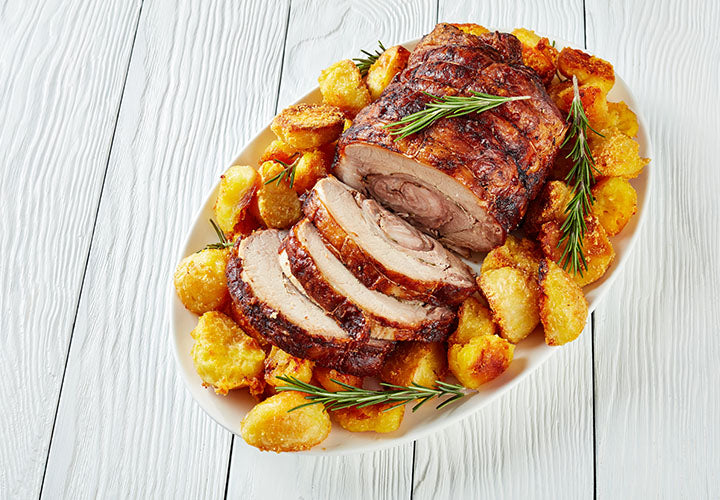
Recipe submitted courtesy of Spice House Manager, Mike Kutka. Try pairing this pork loin with roasted potatoes and a sparkling fruit cider.
Yield: 6-8 servings
- Butterfly the loin, coat with maple garlic and soy, and marinate at least 2 hours for best flavor.
- Sauté onion and celery, mix with boxed or homemade stuffing, layer, roll, tie, and roast at 350°F.
- Cook to a safe internal temperature, then rest before slicing. Use additions like dried fruit or nuts to boost flavor.
Spices
Featured in this Recipe


Preparation Instructions:

thespicehouse.com
More About This Recipe
Frequently Asked Questions
How do I butterfly a pork loin?
Place the loin on a cutting board. Using a sharp knife, slice horizontally through the center lengthwise, stopping about 1/4 inch from the other side so the meat opens like a book. Pound lightly to an even thickness if needed. Ask your butcher to butterfly it for you if you prefer.
How long should I marinate the pork?
Marinate at least 2 hours for noticeable flavor. For best results, refrigerate 6 to 12 hours. Do not leave it at room temperature; always marinate in the fridge.
What internal temperature should I cook the pork to?
The recipe notes 160°F, which produces a well done roast. The USDA recommends 145°F followed by a 3 minute rest for safe, slightly pink and juicier pork. Either option is safe if you follow the rest guidance. Let the roast rest 10 to 15 minutes before slicing.
How do I keep the pork loin from drying out?
Do not overcook. Use the marinade and the stuffing to add moisture. Sear briefly before roasting or baste once or twice while cooking. If the outside browns too fast, tent the roast loosely with foil. Rest the meat after cooking to let juices redistribute.
Can I use pork tenderloin or a bone-in loin instead?
Yes. Pork tenderloin is thinner and will cook much faster, so reduce cook time and check temperature early. A bone-in loin may need longer cooking. Adjust seasoning by weight and monitor internal temperature rather than time.
How do I tie the roast so the stuffing stays inside?
Lay the stuffed loin seam-side down, then tie with kitchen twine every 1 to 1.5 inches. Tuck the ends of the stuffing in before tying. You can secure seams with toothpicks if needed. Even, snug ties help the roast hold its shape and keep stuffing from falling out.
Can I prepare this ahead and how do I reheat leftovers?
You can assemble and refrigerate the stuffed, tied loin up to 24 hours before roasting. To reheat cooked slices, place in a single layer in a covered dish and warm in a 325°F oven until heated through. You can also microwave portions, but oven heating keeps meat juicier.
What can I add to the stuffing to switch up the flavor?
Try dried fruit like cranberries or apricots, chopped nuts such as pecans or walnuts, diced apples, cooked sausage, or fresh herbs. Sauté the onion and celery in butter first for better flavor and follow the stuffing mix liquid directions.
How do I butterfly a pork loin?
Place the loin on a cutting board. Using a sharp knife, slice horizontally through the center lengthwise, stopping about 1/4 inch from the other side so the meat opens like a book. Pound lightly to an even thickness if needed. Ask your butcher to butterfly it for you if you prefer.
How long should I marinate the pork?
Marinate at least 2 hours for noticeable flavor. For best results, refrigerate 6 to 12 hours. Do not leave it at room temperature; always marinate in the fridge.
What internal temperature should I cook the pork to?
The recipe notes 160°F, which produces a well done roast. The USDA recommends 145°F followed by a 3 minute rest for safe, slightly pink and juicier pork. Either option is safe if you follow the rest guidance. Let the roast rest 10 to 15 minutes before slicing.
How do I keep the pork loin from drying out?
Do not overcook. Use the marinade and the stuffing to add moisture. Sear briefly before roasting or baste once or twice while cooking. If the outside browns too fast, tent the roast loosely with foil. Rest the meat after cooking to let juices redistribute.
Can I use pork tenderloin or a bone-in loin instead?
Yes. Pork tenderloin is thinner and will cook much faster, so reduce cook time and check temperature early. A bone-in loin may need longer cooking. Adjust seasoning by weight and monitor internal temperature rather than time.
How do I tie the roast so the stuffing stays inside?
Lay the stuffed loin seam-side down, then tie with kitchen twine every 1 to 1.5 inches. Tuck the ends of the stuffing in before tying. You can secure seams with toothpicks if needed. Even, snug ties help the roast hold its shape and keep stuffing from falling out.
Can I prepare this ahead and how do I reheat leftovers?
You can assemble and refrigerate the stuffed, tied loin up to 24 hours before roasting. To reheat cooked slices, place in a single layer in a covered dish and warm in a 325°F oven until heated through. You can also microwave portions, but oven heating keeps meat juicier.
What can I add to the stuffing to switch up the flavor?
Try dried fruit like cranberries or apricots, chopped nuts such as pecans or walnuts, diced apples, cooked sausage, or fresh herbs. Sauté the onion and celery in butter first for better flavor and follow the stuffing mix liquid directions.
Comments