Pasta with Zucchini and Pesto
Make zucchini pesto pasta with salted, wrung zucchini for firm texture. Quick method uses garlic, pesto and pasta water for a silky sauce.
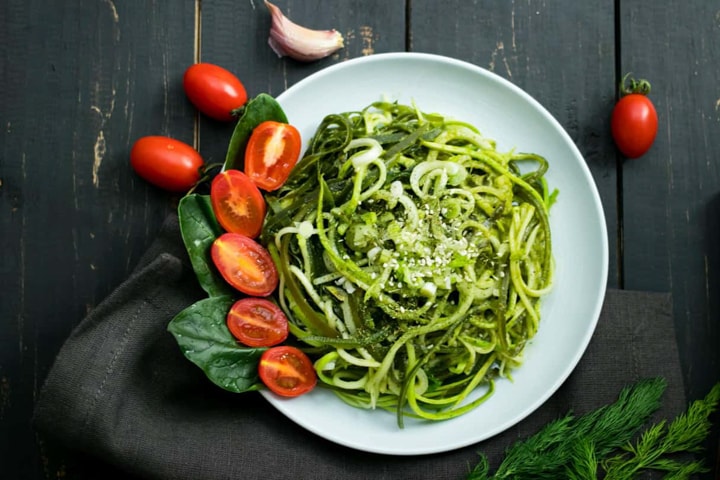
This zucchini pesto pasta recipe comes to us from the authors of several fascinating books on food philosophy, John Thorne and Matt Lewis Thorne. You can subscribe to their bimonthly food newsletter called Simple Cooking. Find them online at www.OutlawCook.com. They write:
'In the past several months, there has been an exponential leap in the quality of zucchini at our local supermarket. Usually, in every season but summer, the typical specimen is flabby, thick, coarse-skinned, dull, and bruised. But these fellows—firm, slim, smooth, and as appealingly bright shade of green—have been impossible to pass by. For me, at least, this represents a change of heart.
One of the first essays I ever wrote for this food letter was prefaced by a quotation from the Maine writer John Gould: 'The first time I saw a zucchini, I killed it with a hoe.' This perfectly expressed my own feelings about that vegetable, which I then considered a mushy, weedy-flavored cousin of the firmer-textured and better-tasting summer squash. At that point, Simple Cooking only had only about fifty subscribers, but one of them sent me a recipe, which, she said, would forever cure me of my disdain for zucchini. And when I finally got myself to try it, that’s just what happened.
The recipe called for a procedure I had already used when preparing eggplant—cutting up the vegetable, tossing it in coarse salt, letting it sit until most of the moisture had come out, and then wringing it dry within a dish towel. When applied to zucchini, however, the outcome is noticeably more dramatic, giving it a denser, almost chewy texture and intensifying its flavor into, well, flavor. (I should note that virtually all the salt is squeezed out with the excess moisture.)
In the original recipe, the zucchini is sauteed in garlicky olive oil and served with shredded basil leaves and grated Parmesan as a summer vegetable dish. But it also works well as a featured ingredient in a few of our favorite pasta dishes. The first of these is prepared with a locally made pesto, which makes for a quick and easy meal.
We sometimes combine the pesto with french-cut green beans, which is very good, but when the born-again zucchini is used instead, the result is phenomenal. The other dish is made with Italian sausage—preferably freshly made and with not so much fennel as to obscure the sweet and delicate taste of the meat.'
Submitted by: John Thorne and Matt Lewis Thorne from Northhampton, MA
Yield: Serves 2
- Salting and tightly wringing the zucchini removes moisture and concentrates its flavor, giving a firmer, chewier bite.
- Sauté garlic in olive oil, add the wrung zucchini, then loosen pesto with reserved pasta water to make a smooth sauce.
- Use regular or thin spaghetti, divide into two servings, and finish with grated Parmesan and lots of black pepper.
Spices
Featured in this Recipe

Preparation Instructions:

thespicehouse.com
Frequently Asked Questions
Why do I salt the zucchini first?
Salting draws out excess water so the zucchini firms up and its flavor concentrates. Most of the salt gets squeezed out with the moisture, so the final dish is not overly salty.
How should I cut the zucchini?
Cut each zucchini in half across the middle. Slice each half into thin slivers about the size of a kitchen match for even cooking and the right texture.
How do I get the zucchini dry enough?
Drain the salted zucchini, spread a clean dish towel, turn the zucchini onto it, wrap and twist the towel tightly to squeeze out as much liquid as you can.
Can I skip salting and wringing the zucchini?
You can, but the zucchini will be softer and release water into the sauce. The salting step gives a firmer, more flavorful result and is worth the 30 minutes.
How much pasta water should I save and why?
Scoop out about 1/4 cup of the pasta cooking water. The starchy water thins and helps the pesto cling to the pasta and zucchini, making a silky sauce.
What pasta and portions work best?
The recipe uses 1/2 pound of regular or thin spaghetti, which serves two. Adjust the amount if you need more servings.
Can I add other ingredients to this dish?
Yes. French-cut green beans work well. Italian sausage also pairs nicely; pick a sausage that is not too heavy on fennel so the meat flavor is not masked.
How do I avoid burning the garlic?
Cook the minced garlic over medium heat in olive oil until it turns translucent. Keep the heat moderate and remove it from the heat once the zucchini and sauce are combined to prevent browning and bitterness.
Why do I salt the zucchini first?
Salting draws out excess water so the zucchini firms up and its flavor concentrates. Most of the salt gets squeezed out with the moisture, so the final dish is not overly salty.
How should I cut the zucchini?
Cut each zucchini in half across the middle. Slice each half into thin slivers about the size of a kitchen match for even cooking and the right texture.
How do I get the zucchini dry enough?
Drain the salted zucchini, spread a clean dish towel, turn the zucchini onto it, wrap and twist the towel tightly to squeeze out as much liquid as you can.
Can I skip salting and wringing the zucchini?
You can, but the zucchini will be softer and release water into the sauce. The salting step gives a firmer, more flavorful result and is worth the 30 minutes.
How much pasta water should I save and why?
Scoop out about 1/4 cup of the pasta cooking water. The starchy water thins and helps the pesto cling to the pasta and zucchini, making a silky sauce.
What pasta and portions work best?
The recipe uses 1/2 pound of regular or thin spaghetti, which serves two. Adjust the amount if you need more servings.
Can I add other ingredients to this dish?
Yes. French-cut green beans work well. Italian sausage also pairs nicely; pick a sausage that is not too heavy on fennel so the meat flavor is not masked.
How do I avoid burning the garlic?
Cook the minced garlic over medium heat in olive oil until it turns translucent. Keep the heat moderate and remove it from the heat once the zucchini and sauce are combined to prevent browning and bitterness.
Comments