02.02.2022
An Intro to Chili Oil
Learn what chili oil is, how to make it, spice and chile choices, storage tips, and how to use it in meals.
- Chili oil is made by infusing hot oil with dried chiles and optional aromatics or spices. You can either heat spices in oil first or pour hot oil over chile flakes.
- Use whole spices for infusion and avoid ground powders that burn. Chili crisp is a crunchy cousin made with fried garlic, onion, or toasted soybeans.
- Control heat by chile type and amount. Store homemade chili oil in a sealed jar; refrigerate if it contains fresh ingredients.
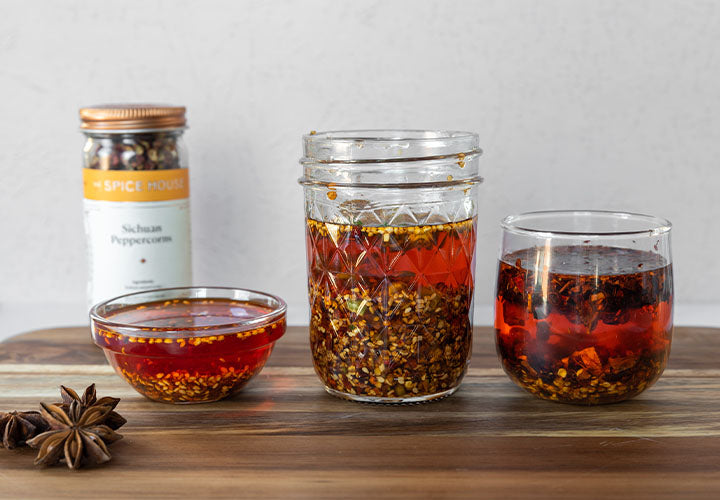

Chili oil is a popular condiment around The Spice House, and for good reason. Its savory, aromatic, hot, and complex allure has us spooning it over plates of hummus, bowls of ramen, steamed dumplings, and our morning eggs. It’s also just fun to make, wildly customizable, and simple to prepare. We’ve been playing with a few recipes lately, and are excited to share our kitchen notes with you.

What is Chili Oil?
Chili oil is a condiment made from cooking oil, spices, and chile peppers. It is commonly made with dried, crushed Chinese chiles and Sichuan Peppercorns. Chili oil is especially popular in Chinese and Southeast Asian cuisine, but variations can be found throughout the world.
The simplest way of making chili oil is by adding hot cooking oil to a bowl of crushed, dried chile peppers. The peppers fry and infuse the hot oil, in turn making flavorful oil that can be used in the kitchen and at the table. You can also flavor the hot oil first by simmering it with spices and aromatics. These spices are then strained out before the hot oil is introduced to the dried chiles.
Chili crisp is a close relative to chili oil, with the addition of ingredients such as fried garlic, onion, shallot, and toasted soybeans. This gives it a crunchy, savory texture that doubles its deliciousness as a condiment.

What Spices Are Used in Chili Oil?
Simmering and infusing the oil with spices first adds an essential aromatic component and delicious depth of flavor. This is also where a lot of the customization comes into play, letting you make an oil that reflects your flavor preferences.
Whole spices work best for this step. Chinese and Southeast Asian spices are a great place to start, but there are no set rules to flavoring chili oil. Below you will find a list of popular flavors for infusing oil. In addition to the spices below, you can add fresh ingredients such as garlic bulbs, ginger root, fresh shallots, or galangal root.
Note: Many of these whole spices are strained out before the hot oil is combined with the chile flakes. The final chili oil will be a ready-to-eat condiment. You can also include spices with the chile flakes for the hot oil step, but avoid adding ground spices as they will burn. Try coarser ingredients like Chopped Garlic, Chopped White Onion, or Cracked Black Pepper. Their coarser size allows them to caramelize in the oil, adding a delicious crunch to the final product.
Spices for Infusing Oil:
- Bay Leaves
- Black Peppercorns
- Cumin Seeds
- Coriander Seed
- Cloves
- Fennel Seed
- Star Anise
- Sichuan Peppercorns
- Cardamom Pods
- Black Cardamom Pods
- Korintje Cinnamon Sticks
- Saigon Cinnamon Pieces
- White Peppercorns
- Long Pepper
Other ingredients to consider are salt, sugar, honey, Monosodium Glutamate, vinegar, sesame oil, Black Sesame Seeds, Toasted Sesame Seeds, or White Sesame Seeds. These extra ingredients should be stirred into the oil after the chiles are added and it has cooled to room temperature. You can also stir in one of our premium spice blends for an extra boost of flavor. Try blends such as our Sichuan Chile BBQ Rub, Chinese Five Spice, or Argyle Street Stir Fry Blend.
What Chile Peppers Are Used in Chili Oil?

Much like spices, peppers can be left to your personal preference. Dried Chinese chiles are the most popular for chili oil, and dried red peppers in general tend to work the best. Traditional Chinese and East Asian recipes often call for Tien Tsin Chiles. You can also experiment with chiles like Guajillo Chiles, Chile de Arbol, Aleppo Pepper, and Crushed Red Pepper. To use whole peppers, remove the seeds and stems before crushing them in a mortar and pestle, or blitzing them in a food processor. Try to avoid any ground or powdered chiles when making chili oil. The powder can burn easily and also over-spice the oil.
Spice House Chili Oil Recipes
We asked Spice House employees for their own take on this fiery condiment. Here you will find three new recipes to get you started, or inspire your own take. If you already have your own favorite way of preparing chili oil, let us know in the comments.
Sichuan Hot Chili Oil
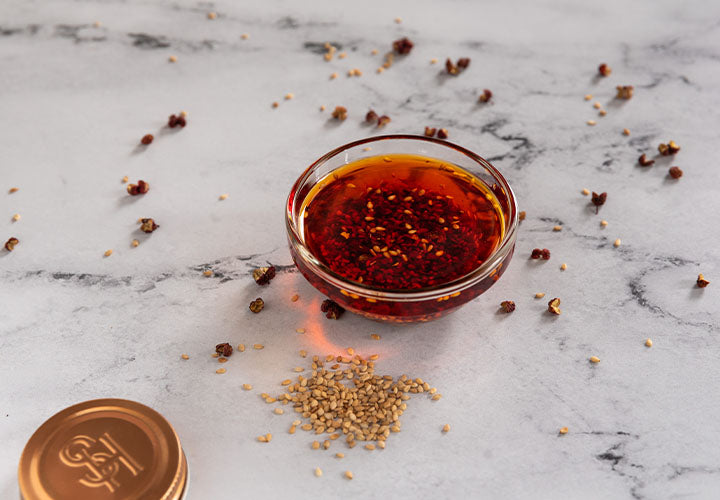
Recipe by Stephanie Schultz, Spice House Wholesale Accounts Specialist
This smoky, flavorful oil is a delicious way to top off any southeast Asian dish. It will become your new favorite condiment!
Sichuan Garlic Chili Oil Crisp
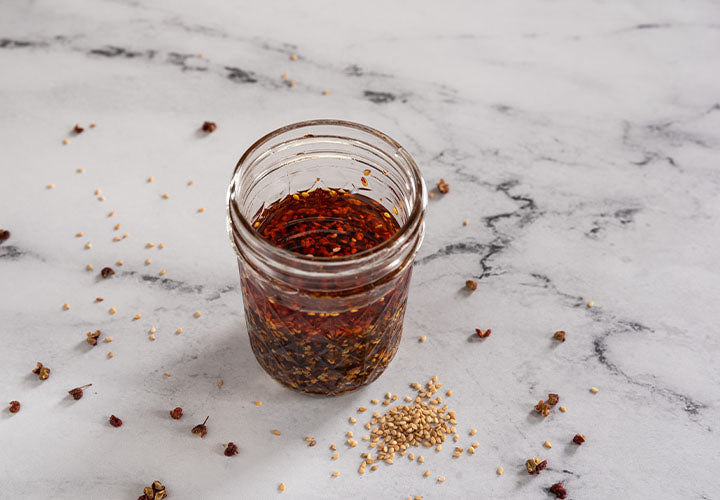
Recipe by Lonnie Romero, Spice House Culinary Specialist
I love to spoon this condiment over plain noodles or atop a plain bowl of rice. It also makes a phenomenal finisher for a plate of fresh hummus.
Sweet Spiced Garlic Chili Oil

Recipe by Geoff Marshall, Digital Content Manager
This aromatic chili oil is an excellent condiment for noodles, rice dishes, pot stickers, and scrambled eggs. It also makes a great ingredient for a meat marinade or vegetable stir fry.
Frequently Asked Questions
What is chili oil?
Chili oil is a condiment made by infusing cooking oil with dried chile peppers and often spices or aromatics. It is common in Chinese and Southeast Asian cooking and ranges from smooth and savory to crunchy if solids are included.
What is the easiest way to make chili oil at home?
The simplest method is to place crushed dried chiles in a heatproof bowl and carefully pour hot oil over them so the chiles sizzle and release flavor. Alternatively, simmer whole spices and aromatics in oil, strain them out, then pour the hot, flavored oil over the chile flakes.
Which spices should I use to flavor the oil?
Whole spices work best. Try bay leaves, Sichuan peppercorns, star anise, fennel, cumin, coriander, cinnamon sticks, cardamom, or black peppercorns. Simmer whole spices in the oil and strain them before adding chiles for a clean, aromatic oil.
Which chiles are best for chili oil?
Dried red chiles are most common. Popular choices include Tien Tsin, chile de arbol, Guajillo, Aleppo, and crushed red pepper. Use coarsely crushed or flaked peppers rather than powders to avoid burning and over-spicing.
What is the difference between chili oil and chili crisp?
Chili oil is mostly flavored oil with suspended chile flakes. Chili crisp includes crunchy fried solids like garlic, shallot, onion, or toasted soybeans, which add texture and a deeper savory flavor.
How can I control the heat and flavor?
Adjust heat by choosing milder or hotter chiles and changing the amount of flakes. Remove seeds for less heat, add sugar or sesame oil to mellow sharpness, and pick spices that shift the profile toward smoky, citrusy, or floral notes.
How should I store homemade chili oil and how long will it last?
Store chili oil in a clean, airtight jar. If it contains only dried chiles and spices, keep it in a cool dark pantry for several weeks to a few months. If you used fresh garlic, ginger, or shallots, refrigerate and use within 2 to 4 weeks to reduce spoilage risk.
What are common ways to use chili oil in cooking?
Use it as a table condiment for dumplings, noodles, eggs, rice, and hummus. It also works as a marinade or stir-fry seasoning and can be stirred into dressings, soups, and sauces for heat and aroma.
What is chili oil?
Chili oil is a condiment made by infusing cooking oil with dried chile peppers and often spices or aromatics. It is common in Chinese and Southeast Asian cooking and ranges from smooth and savory to crunchy if solids are included.
What is the easiest way to make chili oil at home?
The simplest method is to place crushed dried chiles in a heatproof bowl and carefully pour hot oil over them so the chiles sizzle and release flavor. Alternatively, simmer whole spices and aromatics in oil, strain them out, then pour the hot, flavored oil over the chile flakes.
Which spices should I use to flavor the oil?
Whole spices work best. Try bay leaves, Sichuan peppercorns, star anise, fennel, cumin, coriander, cinnamon sticks, cardamom, or black peppercorns. Simmer whole spices in the oil and strain them before adding chiles for a clean, aromatic oil.
Which chiles are best for chili oil?
Dried red chiles are most common. Popular choices include Tien Tsin, chile de arbol, Guajillo, Aleppo, and crushed red pepper. Use coarsely crushed or flaked peppers rather than powders to avoid burning and over-spicing.
What is the difference between chili oil and chili crisp?
Chili oil is mostly flavored oil with suspended chile flakes. Chili crisp includes crunchy fried solids like garlic, shallot, onion, or toasted soybeans, which add texture and a deeper savory flavor.
How can I control the heat and flavor?
Adjust heat by choosing milder or hotter chiles and changing the amount of flakes. Remove seeds for less heat, add sugar or sesame oil to mellow sharpness, and pick spices that shift the profile toward smoky, citrusy, or floral notes.
How should I store homemade chili oil and how long will it last?
Store chili oil in a clean, airtight jar. If it contains only dried chiles and spices, keep it in a cool dark pantry for several weeks to a few months. If you used fresh garlic, ginger, or shallots, refrigerate and use within 2 to 4 weeks to reduce spoilage risk.
What are common ways to use chili oil in cooking?
Use it as a table condiment for dumplings, noodles, eggs, rice, and hummus. It also works as a marinade or stir-fry seasoning and can be stirred into dressings, soups, and sauces for heat and aroma.
stars:5
Hello, Many years ago, new Mother and wife, I started making ‘food gifts’ as I had no time to shop. Starting with baked goodies then liquors now chili oils. My personal favorite is Aleppo and garlic!! Knowing heat preferences I have gone from, mild sweet heat to wheres the fire extinguisher!!
I am in the middle as I like to, taste the food too. I use chili oil on everything from, eggs in the morning to fish/seafood for dinner. Great stuff. Hardly any work! Thanks for the amazing recipes and, your excellent spices! I would love to visit one of your stores!!!
Happy Eating To You Until We Meet Again!raf
Great recipes!!
I love these and my bf will love me more for these lol ty