Quick Pickle Brine
Make quick refrigerator pickles with a 3-2-1 brine. Simple, customizable, and ready in minutes for cucumbers, beets, carrots, and more.
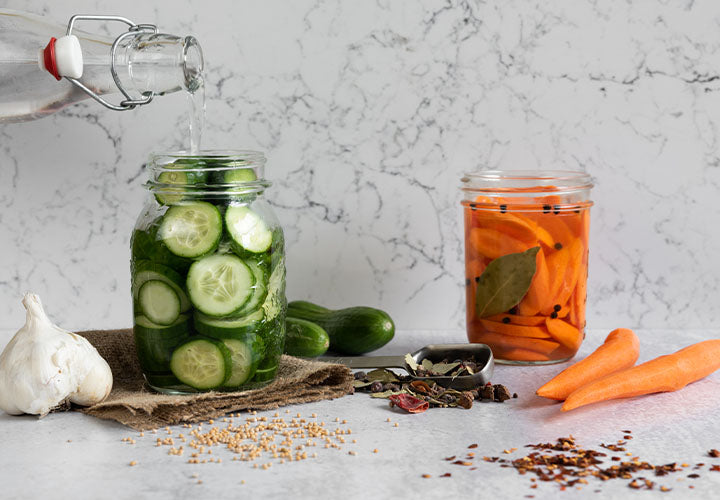
Quick pickling is a simple technique every cook should learn. Once you have the basic pickle brine recipe down, you can pickle anything and everything at the farmers’ market. Maybe skip the bar of artisanal lavender soap, though?
Submitted by: Geoffrey Marshall Marshall from Chicago, IL
Yield: 5 cups of brine.
- Use the 3-2-1 ratio: three parts vinegar, two parts water, one part sugar; add salt and spices to taste.
- Heat the brine until sugar and salt dissolve, pour over packed veggies, then cool to room temperature before refrigerating.
- Store jars in the fridge for best flavor and safety; reduce sugar or swap spices to customize flavor.
Preparation Instructions:

thespicehouse.com
More About This Recipe
Frequently Asked Questions
What is quick pickling and how is it different from canning?
Quick pickling is a fast method that uses a vinegar brine and refrigeration to preserve vegetables. It does not make shelf-stable jars. For long-term storage at room temperature you must follow a tested water bath canning recipe.
What does the 3-2-1 ratio mean?
3-2-1 stands for three parts vinegar, two parts water, and one part sugar. Keep those proportions when scaling this brine so acidity and balance stay the same.
Can I use vinegars other than distilled white vinegar?
Yes. Apple cider, rice, or wine vinegars work. Make sure the vinegar is about 5 percent acidity. Swap types for different flavor but keep the 3-2-1 ratio and taste as you go.
How do I make pickles less sweet?
Reduce the sugar in the brine or omit it. Sugar balances acidity and rounds flavor, so cut gradually and taste. You can also use half the sugar or a small amount of alternative sweetener.
How long will quick refrigerator pickles last?
Stored in the fridge, they stay best for about 2 to 4 weeks. They may keep longer, but flavor and crunch decline over time. For shelf-stable pickles follow a canning procedure.
Do jars and lids need to be sterilized?
For refrigerator pickles, clean jars well with hot soapy water and rinse. Pouring hot brine into warm, clean jars helps sanitize them. If you want extra safety, sterilize jars by boiling them briefly.
How do I avoid mushy or overcooked vegetables?
Pack raw, crisp vegetables tightly and pour hot brine quickly, or let the brine cool slightly before pouring. Chill jars after brining and avoid leaving vegetables in very hot brine for long periods. Soaking vegetables in ice water before packing can help maintain crunch.
Can I change the spices and reuse the brine?
Yes, swap or mix spices like mustard seeds, coriander, peppercorns, dill, bay leaf, or cloves to match your taste. Reusing brine is not recommended for safety and flavor. If you do reuse it, bring it to a full boil and strain, but fresh brine gives the best, safest result.
What is quick pickling and how is it different from canning?
Quick pickling is a fast method that uses a vinegar brine and refrigeration to preserve vegetables. It does not make shelf-stable jars. For long-term storage at room temperature you must follow a tested water bath canning recipe.
What does the 3-2-1 ratio mean?
3-2-1 stands for three parts vinegar, two parts water, and one part sugar. Keep those proportions when scaling this brine so acidity and balance stay the same.
Can I use vinegars other than distilled white vinegar?
Yes. Apple cider, rice, or wine vinegars work. Make sure the vinegar is about 5 percent acidity. Swap types for different flavor but keep the 3-2-1 ratio and taste as you go.
How do I make pickles less sweet?
Reduce the sugar in the brine or omit it. Sugar balances acidity and rounds flavor, so cut gradually and taste. You can also use half the sugar or a small amount of alternative sweetener.
How long will quick refrigerator pickles last?
Stored in the fridge, they stay best for about 2 to 4 weeks. They may keep longer, but flavor and crunch decline over time. For shelf-stable pickles follow a canning procedure.
Do jars and lids need to be sterilized?
For refrigerator pickles, clean jars well with hot soapy water and rinse. Pouring hot brine into warm, clean jars helps sanitize them. If you want extra safety, sterilize jars by boiling them briefly.
How do I avoid mushy or overcooked vegetables?
Pack raw, crisp vegetables tightly and pour hot brine quickly, or let the brine cool slightly before pouring. Chill jars after brining and avoid leaving vegetables in very hot brine for long periods. Soaking vegetables in ice water before packing can help maintain crunch.
Can I change the spices and reuse the brine?
Yes, swap or mix spices like mustard seeds, coriander, peppercorns, dill, bay leaf, or cloves to match your taste. Reusing brine is not recommended for safety and flavor. If you do reuse it, bring it to a full boil and strain, but fresh brine gives the best, safest result.
OMG!!! Just what I needed for my bumper crop of cukes. First batch: followed the recipe as is: sweet, tangy, delicious. Second batch: added some crushed red chilli: sweet, hot, delicious. Third batch: cut the sugar and added minced California garlic: tangy, garlicky and delicious.